Key points at a glance
- You may only work self-employed after your entry in the list of clinical psychologists or of health psychologists kept by the Ministry of Health. You report changes such as a new place of work within one month.
- Before you start, you need professional liability insurance with at least €1 million per claim and €3 million per year (§ 39 PG), and an Arbeitsort (place of work) that is separate from your living space.
- Since 26 January 2026, the psyhelp service centre has been placing clients in clinical-psychological treatment funded by the ÖGK, SVS and BVAEB. As a Wahlpsycholog:in (psychologist without a contract with the insurance funds), you continue to work with a Kostenzuschuss (cost subsidy).
- Clinical-psychological and health-psychological treatments are exempt from VAT; workshops, supervision, coaching and most expert reports are not.
- You don’t need a trade licence. You register with the SVS and the tax office as one of the Neue Selbständige (“new self-employed”).
This post is general information and does not replace legal or tax advice. Rules change – check details with your chamber, your professional association or your tax adviser.
Clinical psychology and health psychology: two professions, two lists
The Psychologengesetz 2013 (PG) regulates two independent health professions. Both require a completed degree in psychology and postgraduate training, and each has its own list at the Ministry of Health. Many psychologists are entered in both lists.
| Feature | Clinical psychology | Health psychology |
|---|---|---|
| Focus | diagnostics, treatment of mental disorders and states of suffering, crisis intervention (§ 22 PG) | health promotion and prevention, health-psychological analyses and counselling (§ 13 PG) |
| Reserved | clinical-psychological diagnostics, findings and expert reports | health-psychological findings and expert reports |
| List | Liste der Klinischen Psycholog:innen (list of clinical psychologists) | Liste der Gesundheitspsycholog:innen (list of health psychologists) |
| Professional title | “Klinische Psychologin”, “Klinischer Psychologe” or “Klinische:r Psycholog:in” (§ 29 PG) | “Gesundheitspsychologin”, “Gesundheitspsychologe” or “Gesundheitspsycholog:in” (§ 20 PG) |
| Covered by the insurance funds | diagnostics and treatment | no |
Even the title “Psychologin” or “Psychologe” (psychologist) is protected: it requires a completed degree in psychology of at least 300 ECTS (§ 4 PG). You don’t need a Gewerbeberechtigung (trade licence), because the Gewerbeordnung (Trade Regulation Act) does not apply to either profession (§ 6(5) PG). After several years of practice in a field and further training of at least 120 units, you may add up to four specialisations in brackets after your professional title; they are entered in the list (§ 20(5) and § 29(5) PG).
Self-employed as a clinical psychologist: the requirements
The law lists exactly what you need to practise self-employed (§ 16 PG for health psychology, § 25 PG for clinical psychology):
- Entitlement to the title “Psycholog:in” (§ 4 PG)
- Completed postgraduate training with a final certificate
- Full legal capacity, health fitness and trustworthiness
- The German language skills the profession requires
- Professional liability insurance under § 39 PG
- A notified place of work that is equipped and separate from your living space
- Entry in the relevant list at the Ministry of Health
During postgraduate training you work in an employment relationship under supervision; your own practice is only possible after the entry. You submit the application to the Ministry of Health, together with proof of your professional liability insurance.
Professional duties under the Psychologengesetz
| Duty | Rule | PG |
|---|---|---|
| Report changes | name, place of work, postal address, breaks of more than three months and the end of your practice within one month | § 31 |
| Invoice | issue a Honorarnote (invoice), except when billing the insurance fund directly | § 32(6) |
| Online sessions | only where professionally or geographically justified; document the reason | § 32a |
| Continuing education | at least 150 units in five years, including supervision | § 33 |
| Documentation | keep for at least ten years, also after you stop practising | § 35 |
| Confidentiality | also applies to assistants and trainees | § 37 |
| Advertising | no unobjective or untrue information, no commissions for referrals | § 38 |
| Professional liability | at least €1 million per claim, €3 million per year, no limit on cover for claims after the policy ends | § 39 |

Place of work and premises: discretion first
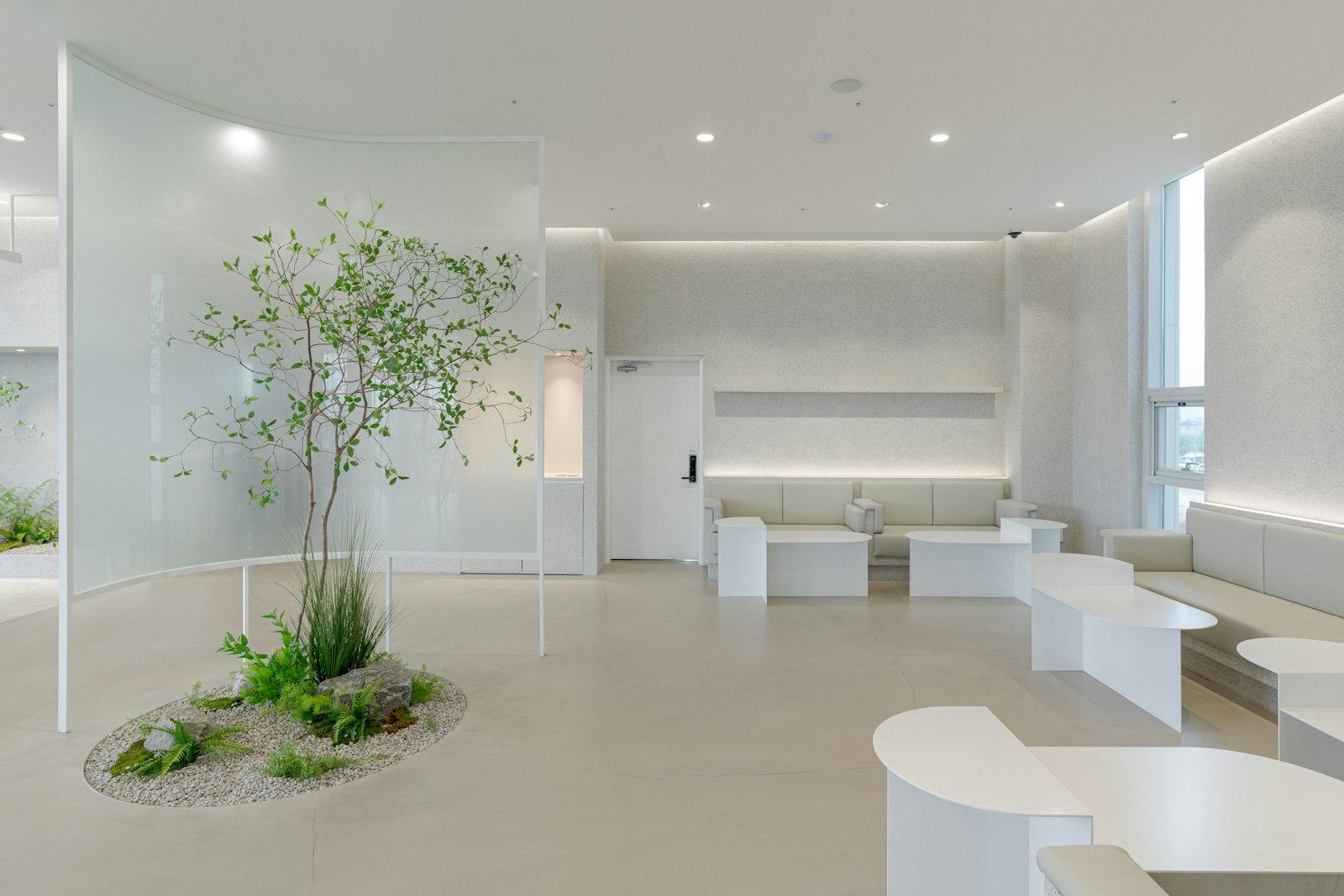
The place of work must be suitably equipped and separate from any living space (§ 18(2) and § 27(2) PG). A practice in your own house is possible; a study next to the kitchen is not. Mark the place at least with your name and professional title. More important than the legal position is how your clients feel: they should feel safe from the very first moment.
- A soundproofed treatment room – conversations must not be audible outside
- A waiting area where clients don’t have to meet each other, or appointments with buffer time
- A quiet spot for psychological testing, with a table, good lighting and no distractions
- Good public transport links, step-free access if possible, and a discreet practice sign
- Lockable cabinets for findings and test materials, especially in shared rooms
How to choose a location and plan the finances of your start is described in the general guide to opening a practice in Austria.
Insurance-funded treatment, cost subsidy and fees
Since 1 January 2024, clinical-psychological treatment has been on a par with medical care in the ASVG. This gives your practice several routes, which you can also combine:
- Insurance-funded places via psyhelp: The ÖGK, SVS and BVAEB offer clinical-psychological treatment free of charge under a contract with the professional association BÖP. Since 26 January 2026, insured people contact the psyhelp service centre and, after a clearing interview, are referred to participating clinical psychologists. Billing runs via psyhelp; clients pay nothing. The BÖP can tell you whether and how you can take part.
- Wahlpsycholog:in with a cost subsidy: Your clients pay your fee and submit the invoice to their insurance fund. This requires a disorder of clinical significance and a medical examination before the second session; from the eleventh session, approval by the fund is needed.
- Clinical-psychological diagnostics: This has been covered by the insurance funds for some time, with contracted psychologists on referral.
- Health psychology: The insurance funds only pay for the treatment of illness. Clients pay for health-psychological counselling, prevention and workshops themselves, or clients such as companies pay as part of workplace health promotion.
- Fees: You set your fee yourself. State it on your website, together with a note on which subsidy is possible and that insurance-funded places are available via psyhelp. For many people, that is the reason to get in touch.
SVS, VAT and tax office
- Social insurance: As a freelance psychologist, you are one of the “Neue Selbständige” at the SVS (social insurance for the self-employed). If your income exceeds the insurance threshold (2026: €6,613.20 a year), register within one month of starting. Registering late costs a surcharge of 9.3% on the contributions.
- Tax office: Register your new activity via FinanzOnline with the Fragebogen zur Betriebseröffnung (business start-up questionnaire).
- Professional liability insurance: Compare offers, including via the BÖP. Cover for claims after the policy ends may neither be excluded nor time-limited. On request, you must inform clients about your insurance (§ 36 PG).
For VAT, it depends on the individual service. Treatments are exempt under § 6(1)(19) UStG without the right to deduct input tax: you don’t charge VAT, but you can’t deduct input tax either. According to the VAT guidelines of the Ministry of Finance, this applies to the therapeutic work of clinical and health psychologists, but not to everything else you offer:
| Service | VAT |
|---|---|
| Clinical-psychological diagnostics and treatment | exempt (§ 6(1)(19) UStG) |
| Counselling with a therapeutic aim, for example for personal conflicts | exempt |
| Expert reports for diagnosis or to clarify treatment | exempt |
| Expert reports for courts, authorities or insurers | usually taxable |
| Workshops, talks, teaching, supervision, coaching, organisational consulting | taxable |
For the taxable services, the Kleinunternehmerregelung (small business exemption) helps: up to €55,000 in turnover a year, you remain exempt (§ 6(1)(27) UStG). Your exempt treatments don’t count towards this threshold.
Online sessions and data protection
Clinical-psychological and health-psychological services by video are allowed, but not without limits (§ 32a PG): there must be a professionally or geographically justified need and the client’s agreement, the session runs synchronously by audio and video, and you document the reason. Psychological testing usually remains an in-person appointment.
On the technical side: a video tool with end-to-end encryption, servers in the EU and a data processing agreement. The same applies to appointment booking, email and digital storage of findings, because health data is specially protected under the GDPR.

A website that builds trust
People looking for a clinical psychologist are often in a difficult situation, and many don’t know exactly what clinical-psychological treatment is. Your website should therefore do one thing above all: explain what you offer and make the first step easy.
How to get it right
- A friendly portrait and a few personal sentences on why you chose this profession
- Explain in simple words what clinical-psychological treatment and diagnostics are
- Describe the process, fees, cost subsidy and the route via psyhelp
- Your exact professional title and your entry in the list
- A note on emergency numbers for acute crises
Better not
- Client testimonials or reviews – even one review can reveal that someone is in treatment
- Methods or titles for which you have no training and no entry
- Promises of a cure (“Free of anxiety in 10 sessions”)
- Contact forms that ask about diagnoses or symptoms
What must go in the Impressum (legal notice) and the privacy policy is explained in the post on mandatory information for psychology practices. Which information is allowed is covered in the post on advertising rules for psychologists. Which pages a good practice website has is shown in the post What belongs on a practice website.
Websites for psychology practices
Take a look at example websites built exactly this way: calm, clear, without reviews – with process, fees and insurance subsidy.
Seven steps to your own psychology practice
Apply for the entry
With your final certificate, proof of fitness and trustworthiness, liability insurance and place of work, into the list of clinical psychologists or of health psychologists. Without the entry, no self-employed work and no insurance subsidy.
Take out professional liability insurance
At least €1 million per claim and €3 million per year. You already need the proof for the entry.
Find and report your place of work
Separate from your living space, soundproofed, discreet. You report every change to the ministry within one month.
SVS and tax office
Registration as one of the Neue Selbständige with the SVS and the business start-up questionnaire via FinanzOnline. Clarify which services are subject to VAT.
Choose your route to the insurance funds
Private practice with a cost subsidy, insurance-funded places via psyhelp, diagnostics for the insurance funds – or a combination.
Set up data protection
Record of processing activities, agreements with IT service providers, a secure video tool and secure storage for documentation and findings.
Become visible
Website, Google Business Profile and contacts with GPs, paediatricians and psychiatrists. Test how your entry looks in the search results with the Google preview.
What would your practice website look like?
We’ll build you a free preview with your areas of focus, your process and your fees – with no obligation.
A free preview of how your practice website could look, built by us.